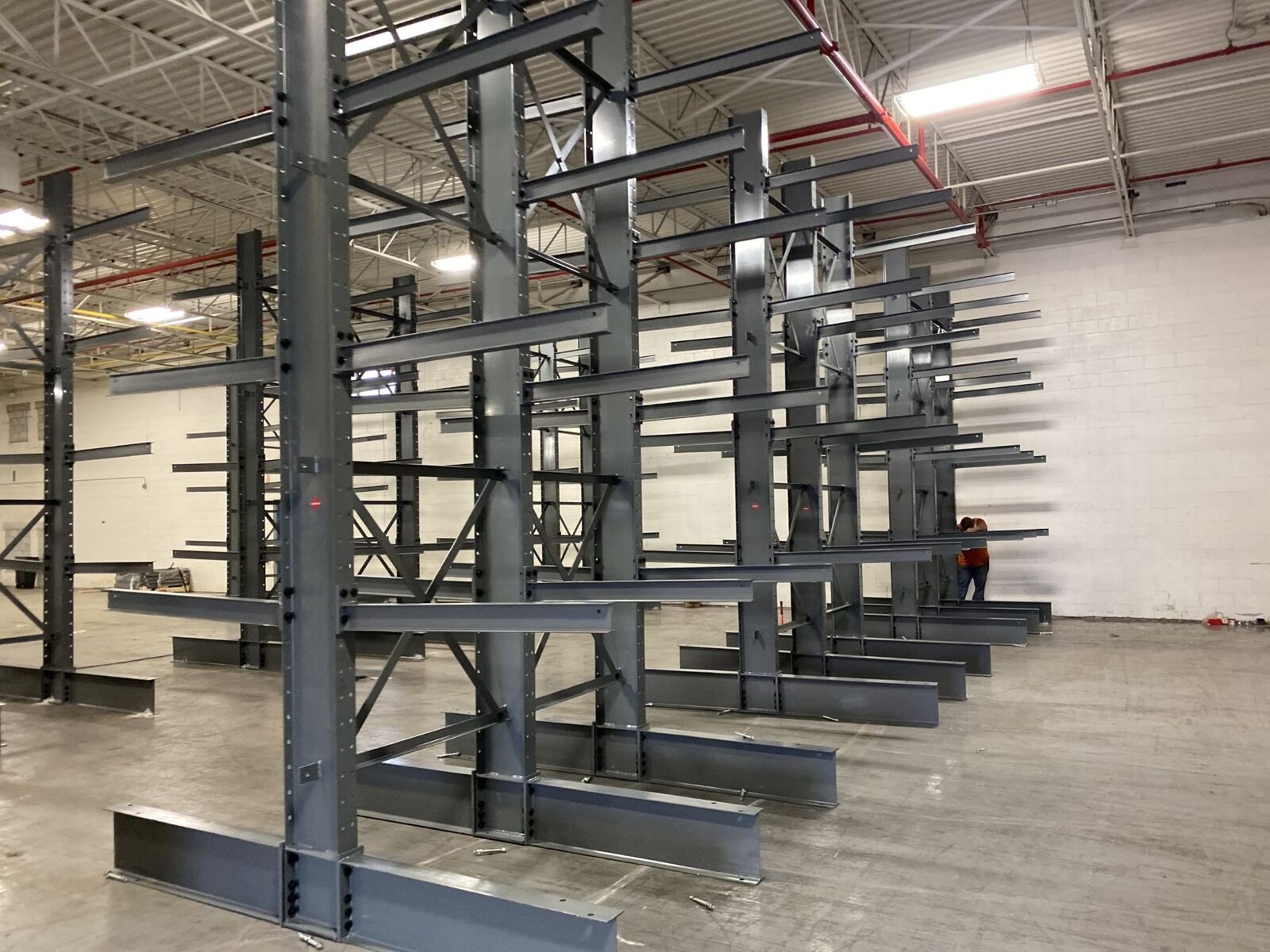
Cantilever Rack in Indian Trail, NC
Cantilever rack in Indian Trail supports lengthy products on arms connected to uprights, leaving the loading face free of front columns. That open access helps operators position bar, pipe, tube, lumber, and supported sheet packs without threading them through the front openings of selective pallet rack.
Flex buildings along US 74 often combine offices with warehouse activity, making circulation a starting requirement rather than leftover space. For building-products and printing-and-packaging operations near Old Monroe Road, the storage plan should preserve access between receiving, workstations, stairs, and exits while allowing long bundles to turn.
A cantilever rack process that starts with access
The layout should reflect the building's mixed uses and the actual stock profile. We gather those constraints before proposing row positions or arm levels.
Separate products by handling needs
Identify long metal sections, wood products, and sheet packs individually. Record the heaviest bundle and the smallest piece returned to storage. Packaging materials and palletized supplies may belong in selective storage rather than sharing the long-stock arrangement.
Mark fixed circulation routes
Show office doors, mezzanine stairs, exit paths, and receiving positions on the plan. In a Sun Valley-area flex operation, for example, reserve the route between assembly and dispatch before allocating the remaining footprint to storage.
Test the loaded approach
Use the forklift's actual specifications and the longest carried product to assess working aisles. A side-loader may change the travel pattern, but its approach, lifting clearance, and transfer area still need checking against the proposed rack faces.
Organize the installation work area
Only new material is included in our supply. We arrange installation crews and manage their work sequence around agreed access boundaries, with unloading and assembly areas identified before the installation visit is scheduled.
Cantilever storage rack choices beyond row length
Support spacing must suit the stiffness of the inventory. Thin tube, flexible trim, or sheet packs can deflect between widely separated uprights even when their weight appears modest. Specify the necessary support points from the product characteristics; reducing the number of uprights is not automatically a sensible saving.
Indoor and outdoor storage call for different discussions about finish and exposure. Material stored outside may also need packaging protection and a way to prevent loose stock from moving unexpectedly. Pipe stops and separators should fit the intended product, and none should be treated as an increase in component capacity.
Changing arm elevations alters usable openings and can affect the approved configuration. Keep a record of the supplied arrangement and verify changes before moving levels or adding loads. Label locations by product family so a dense sheet pack does not migrate into a position intended for a much lighter bundle.
Cantilever racking for flex-building proportions
Begin with the product's depth across an arm and its length along the row. Arm projection must provide suitable support without consuming unnecessary working space. Measure wrapped bundles at their widest point, and distinguish a dense stack of sheet material from loose lengths that need separate containment.
Weight selection involves two different limits: capacity at each arm and the permitted total on its upright. A heavy bundle may be within the combined arm ratings yet overload one support if its weight is uneven. Review maximum loading by level and upright, then display the approved arrangement on load plaques.
A single-sided row can work alongside a perimeter where only one loading face is needed. Double-sided cantilever rack can serve two work zones, but only if both approaches remain available. Count bases, arm projections, load overhang where permitted, and truck movements before deciding that the additional storage face improves the room.
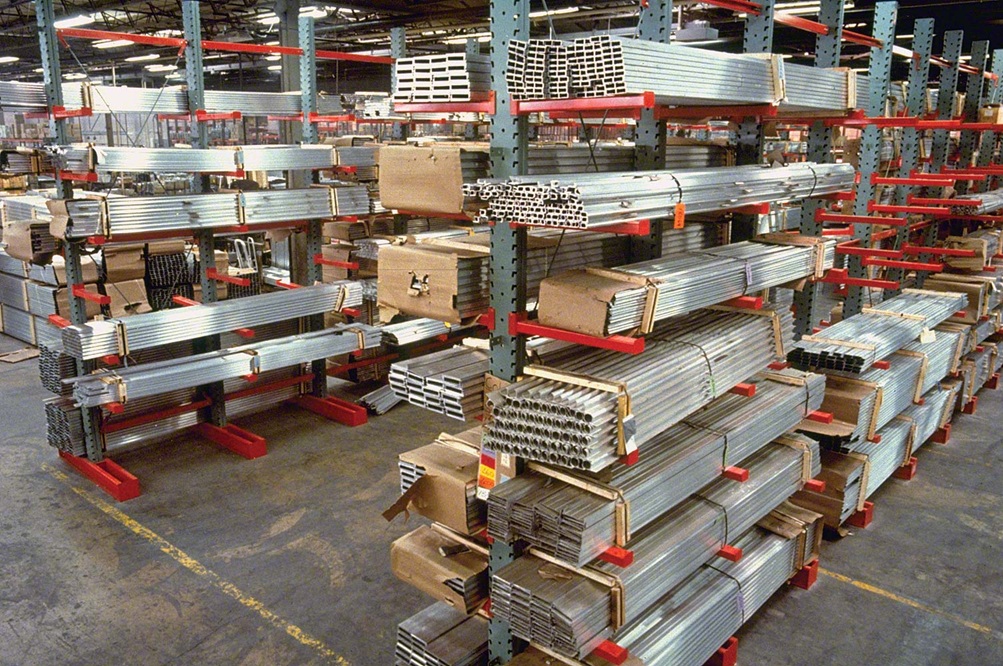
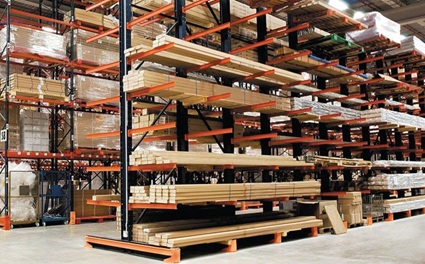
Operations We Rack Around Here
Indian Trail warehouse storage · Cantilever storage rack options
Recent Installations
Racking projects completed for warehouses across the Charlotte metro and nearby North and South Carolina communities.


Share the difficult corners of your floor plan
Include stairs, office entrances, and the full travel path of your longest stock. Our organization is a division of Warehouse Equipment & Supplies Co., with supplying and installing experience since 1997 informing how we discuss practical storage arrangements. (704) 480-3833.
Charlotte Pallet Rack
1515 Mockingbird Ln
Ste 200A
Charlotte, NC 28209
(704) 480-3833Monday - Friday: 8:00 AM - 6:00 PM
Indian Trail storage planning answers
Other Rack Types We Supply in Indian Trail
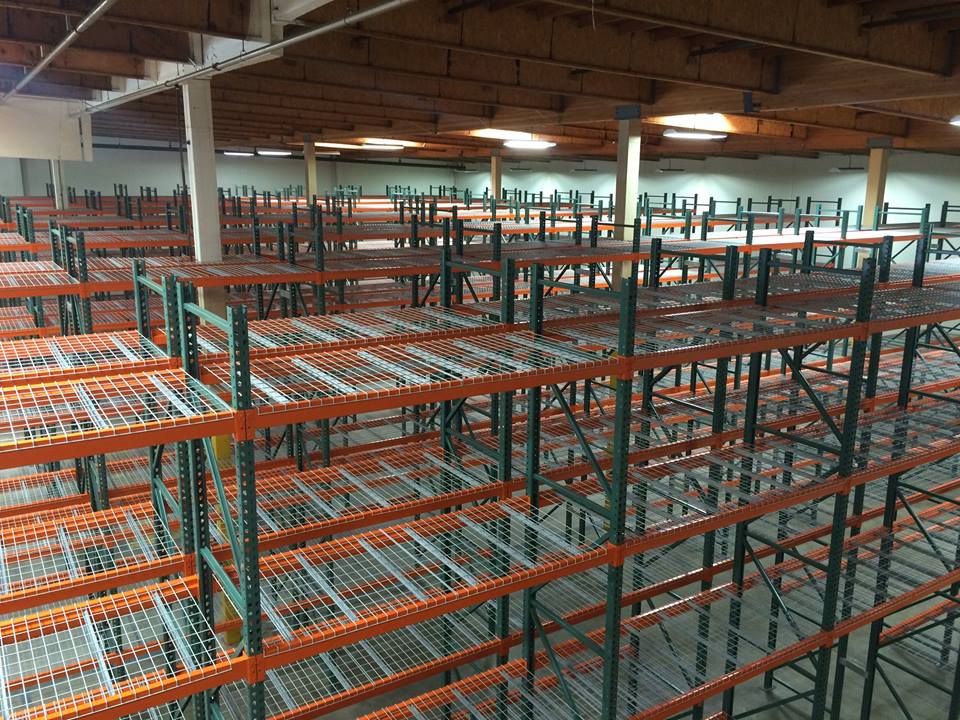
Pallet Rack
Every pallet reachable, every time. The baseline we size everything else against.
View details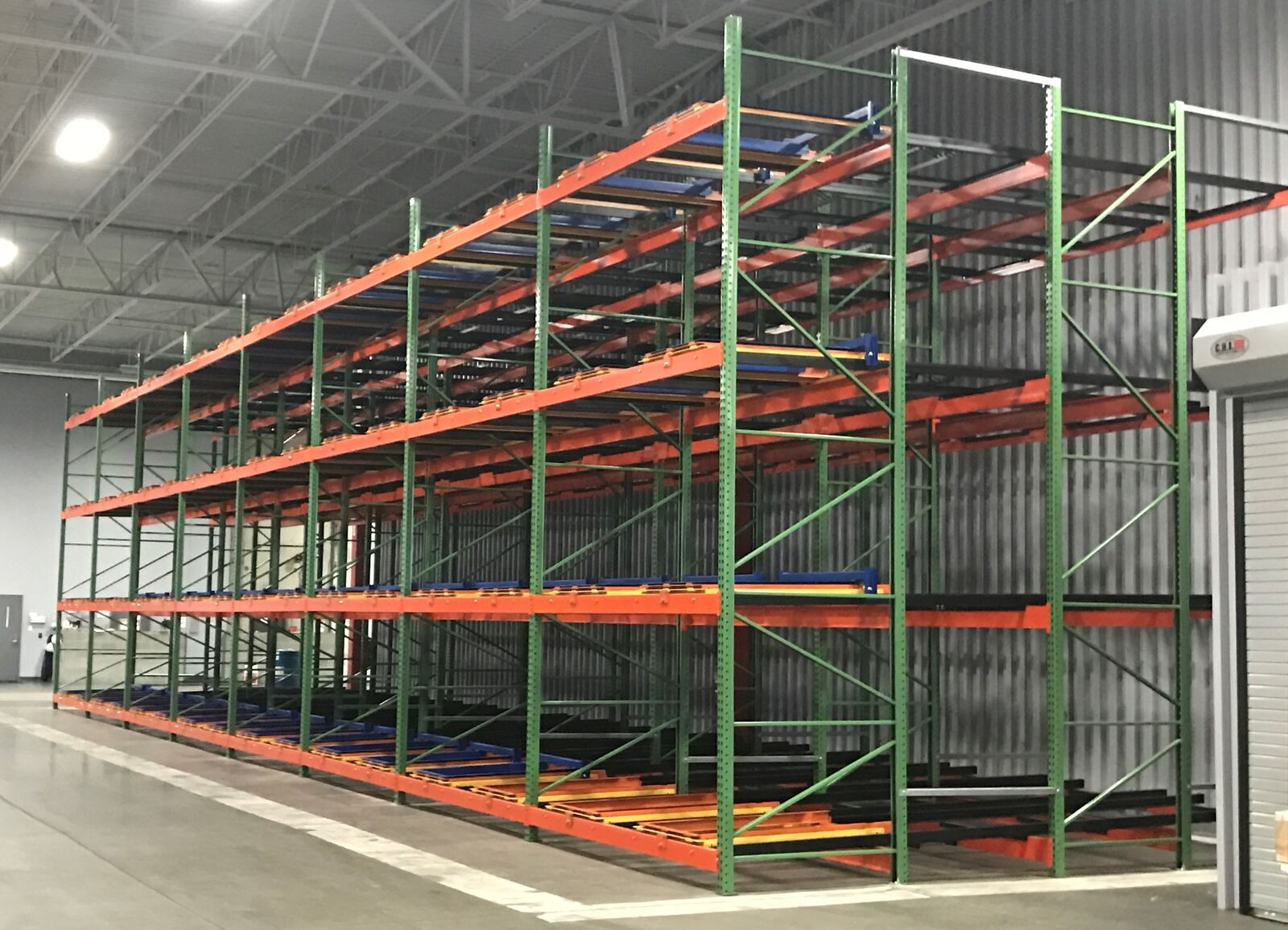
Pushback Rack
Two to six pallets deep from one aisle, without giving up much reach.
View details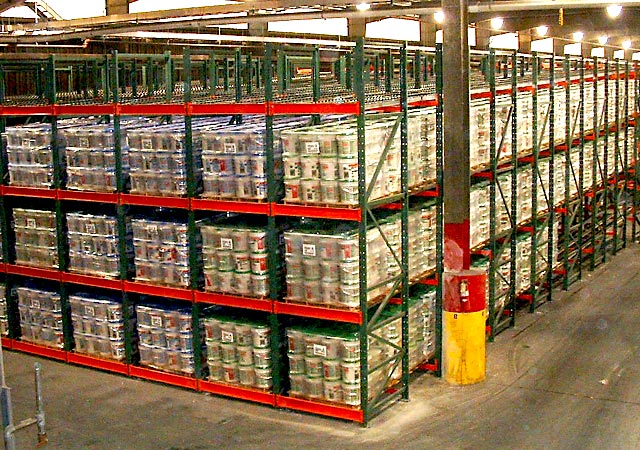
Pallet Flow Rack
Load one side, pick the other, and let gravity enforce first in, first out.
View details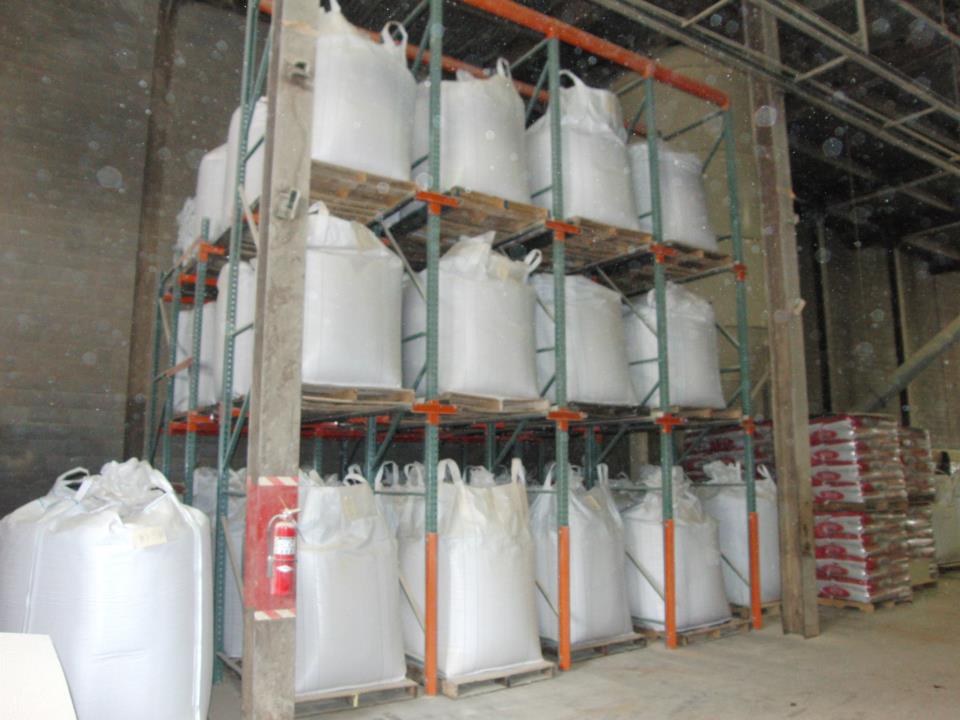
Drive-In Rack
Deep reserve lanes with forklift entry for repeated pallets, trading individual access for fewer aisles.
View details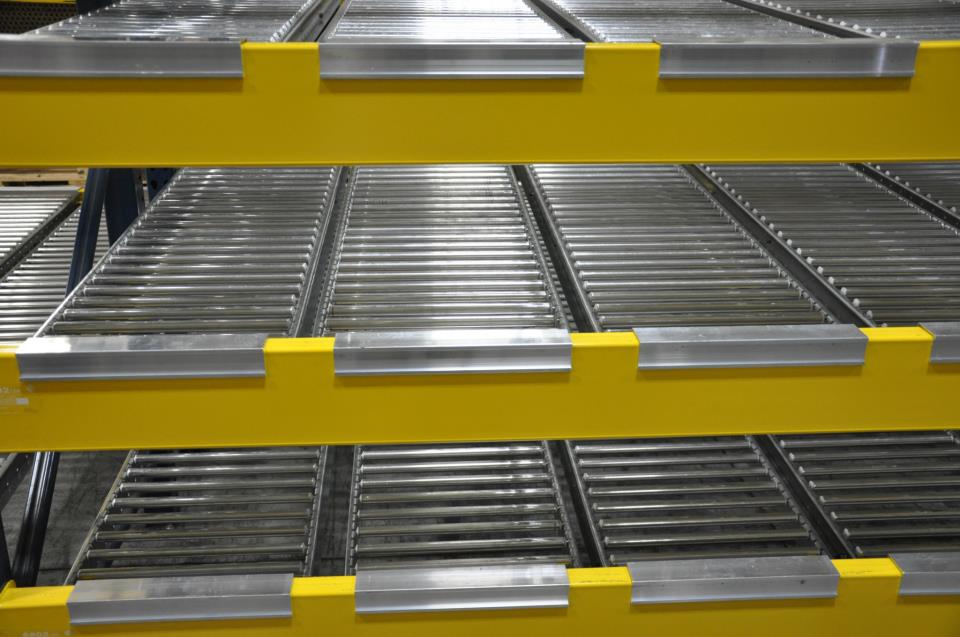
Carton Flow Rack
Cases advance to the picker instead of the picker hunting for cases.
View detailsNearby Areas We Also Serve
Along Indian Trail-Fairview Road and Sardis Church Road, plan the route from unloading to storage so long products do not occupy shared circulation space.
Where We Work
Located in Charlotte, NC, we serve the entire Charlotte metro with industrial pallet racks and warehouse storage solutions.
Charlotte Pallet Rack
Address
1515 Mockingbird Ln
Ste 200A
Charlotte, NC 28209
Phone
(704) 480-3833Business Hours
Monday - Friday: 8:00 AM - 6:00 PM
Saturday: Closed
Sunday: Closed
Need Cantilever Rack in Indian Trail?
Discuss your flex-space measurements and request a cantilever racking proposal based on actual loads.